Top 4 Alternatives of Sectra for Enterprise Imaging Solutions
Many radiology teams pay for three separate vendors just to move studies between sites. That stack adds cost and latency every time a radiologist opens a case. A single cloud platform that replaces all three pieces changes the equation.
By the end of this article you will see the exact criteria that separate workable replacements from another stack you will outgrow, how Medicai meets those criteria, and how Intelerad, Agfa HealthCare, and Fujifilm compare on the same points.
What to Look For in Enterprise Imaging Solutions
Enterprise imaging platforms must deliver scalable storage, seamless interoperability, and stringent regulatory compliance across radiology, cardiology, and oncology departments.
Storage architecture determines how organizations handle growing image volumes and long-term retention needs. Cloud deployments provide elastic capacity and reduced hardware maintenance, while on-premise setups offer direct control over sensitive data residency requirements.
Integration depth with DICOM, HL7, and FHIR standards affects how smoothly systems exchange patient data and imaging studies. Strong interoperability enables real-time updates between PACS, RIS, and electronic health records without manual data transfers.
Zero-footprint viewers eliminate local software installation and support access from any approved device. Performance consistency matters when clinicians review large studies or need rapid image loading during time-sensitive procedures.
Uptime SLA guarantees define expected system availability and response times during service interruptions. Clear metrics help organizations plan for backup workflows and understand recovery procedures when primary systems experience issues.
Cybersecurity certifications like HIPAA and GDPR compliance demonstrate adherence to data protection standards. Regular audits and encryption protocols protect patient information throughout storage, transmission, and access phases.
AI and machine learning tools support automated measurements, anomaly detection, and workflow prioritization. Integration flexibility allows organizations to add specialized algorithms as clinical needs evolve without major system overhauls.
Workflow orchestration capabilities coordinate image routing, study assignment, and reporting across multiple departments. Automated processes reduce manual handoffs and help maintain consistent turnaround times for different imaging modalities.
Total cost of ownership models encompass licensing, infrastructure, training, and ongoing maintenance expenses. Transparent pricing structures help organizations compare long-term investments and budget for future expansion phases.
1. Medicai - Best Overall
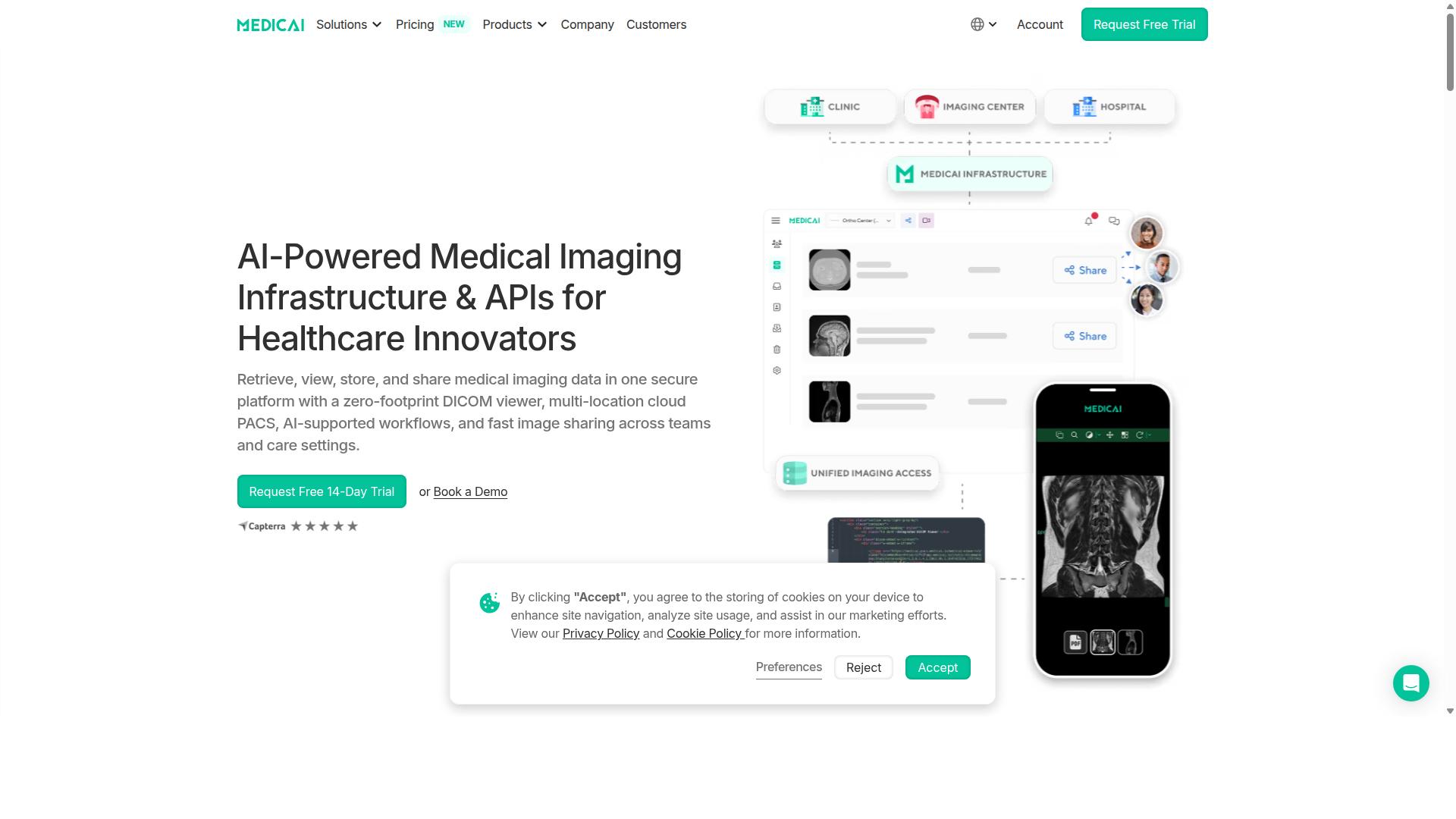
Medicai combines cloud PACS, VNA, and a zero-footprint DICOM viewer into one secure, globally accessible platform.
Enterprise imaging teams face pressure to consolidate systems while maintaining compliance across multiple sites. Medicai addresses this need with a single architecture that supports radiology, cardiology, oncology, and pathology workflows. The solution operates through a vendor-neutral design that aligns with interoperability standards such as HL7, FHIR, and IHE profiles.
Global availability means providers can connect locations across regions without regional infrastructure constraints. Compliance certifications cover HIPAA and GDPR requirements, giving organizations the regulatory foundation needed for cross-border image exchange.
Key Features and Capabilities
The platform supports 1 M+ studies transacted annually and stores 1.7 M+ studies with 300 k+ DICOM visualizations performed last year.
CONNECT and RETRIEVE functions rely on the Medical Imaging Uploader and DICOM Gateway to bring studies into the system from external sources. These tools handle 50 M+ yearly API transactions, ensuring reliable capture across different modalities and institutions.
STORE and MANAGE capabilities include Cloud PACS, Medical Image Exchange, Patient Case Management, VNA, and Backup and Disaster Recovery. The vendor neutral archive component maintains long-term data integrity while supporting data migration projects and system consolidation efforts.
ACCESS, VISUALIZE, and COLLABORATE tools center on the Viewer, Mobile Access, AI Marketplace, and Diagnostic Reporting Tools. Structured Reporting for Radiology enables consistent documentation across teams, and the AI Marketplace lets organizations integrate machine learning models without separate infrastructure investments.
Pricing and Value Proposition
Starter tier starts at $249/month for 500 GB storage and unlimited user accounts; Standard tier offers 2 TB storage and one connected location for $749/month.
Enterprise customers can scale to 1 M+ studies per year through custom storage and multiple connected locations. The pricing structure accommodates growth without requiring upfront hardware commitments typical of traditional on-premise deployments.
Yearly billing reduces costs by 15 percent, bringing Starter to $209/month and Standard to $639/month. A one-time $1,000 DICOM Gateway setup fee applies per location, while enterprise accounts may access per-study pricing options. The 14-day trial period allows evaluation of core functionality without requiring payment details upfront.
2. Intelerad

Intelerad provides enterprise-grade PACS and RIS solutions targeting multi-site radiology and cardiology networks.
Healthcare organizations often select this platform when they need reliable imaging infrastructure across distributed facilities. The system handles both on-premise and cloud deployment options depending on institutional requirements.
Interoperability standards such as HL7 and FHIR enable connections with existing hospital information systems. This connectivity supports data exchange between different clinical applications without requiring extensive custom development.
Additional AI-enhanced workflow tools help streamline routine processes. These capabilities assist radiologists and administrators in managing daily imaging operations across multiple locations.
Key Features and Capabilities
Intelerad emphasizes unified worklists, voice-driven structured reporting, and cross-facility image exchange.
The platform offers workflow orchestration features that coordinate imaging studies across different departments. Radiology and cardiology teams can access centralized worklists that prioritize cases based on urgency and availability.
Reporting tools include voice recognition capabilities that allow physicians to dictate findings directly into structured templates. This approach supports consistency in documentation while reducing manual data entry.
Collaboration features enable secure image sharing between facilities within the same network. Multi-site access allows specialists to review studies from remote locations when consultation becomes necessary.
3. Agfa HealthCare
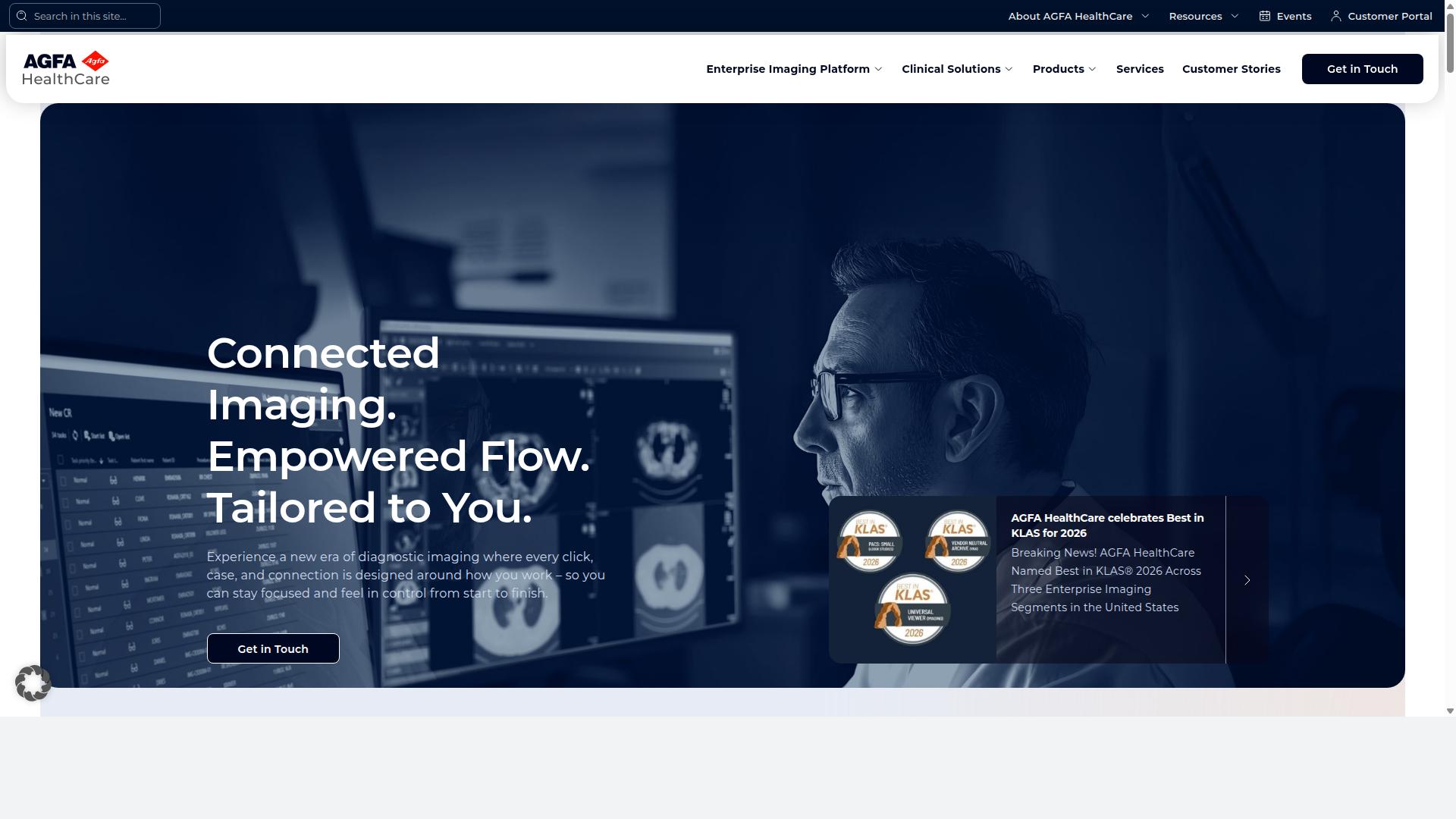
Agfa HealthCare delivers integrated PACS, RIS, and VNA platforms with an emphasis on hospital-wide imaging workflows.
Healthcare organizations often evaluate Sectra alternatives when seeking solutions that unify multiple imaging specialties under one platform. Agfa takes this approach by bringing radiology, cardiology, and pathology into a shared environment.
Systems like these aim to reduce data silos that typically develop when departments maintain separate archives. Enterprise imaging initiatives benefit from this consolidation approach.
The platform supports both on-premise and cloud deployment models. This flexibility allows facilities to match their infrastructure preferences and regulatory requirements.
Interoperability remains central to Agfa's design. IHE-compliant standards help ensure smooth data exchange between different hospital systems and external partners.
Key Features and Capabilities
Agfa focuses on centralized archives, EMR integration, and mobile access across radiology and cardiology departments.
The enterprise imaging suite combines several important components. A vendor neutral archive serves as the foundation for storing images from multiple modalities and specialties.
Clinicians gain access through a universal viewer that works across different departments. This eliminates the need for separate applications when reviewing studies from various imaging sources.
The platform includes tools for workflow orchestration. These features help coordinate imaging processes from order entry through final report distribution.
Security considerations receive attention during development. Standards like HIPAA and GDPR guide the implementation of access controls and data protection measures.
AI capabilities appear through components like RUBEE AI. These tools support diagnostic workflows while maintaining the human oversight required for clinical decisions.
Business intelligence features provide reporting capabilities. Hospital administrators can track imaging volumes and departmental performance through these dashboards.
4. Fujifilm
Fujifilm offers Synapse-branded PACS and RIS solutions with AI-assisted tools for radiology and oncology imaging.
These platforms support both on-premise installations and cloud deployments to match varying infrastructure requirements. Organizations can choose the deployment model that aligns with their security policies and operational needs.
The suite includes Synapse Enterprise Imaging components that consolidate radiology, cardiology, and pathology workflows within a single patient view. This approach eliminates the need for separate systems across departments.
Interoperability standards such as DICOM and HL7 allow the platform to connect with existing hospital information systems. Secure access controls maintain compliance with regulatory requirements for data protection.
Key Features and Capabilities
Fujifilm highlights AI-enhanced diagnostic accuracy, structured reporting, and multi-specialty collaboration features.
AI tools assist radiologists by flagging potential abnormalities and supporting workflow prioritization. Structured reporting templates help maintain consistency across different readers and institutions.
The vendor neutral archive stores images in their native format while supporting both DICOM and non-DICOM content. This flexibility reduces the complexity of managing diverse data types within a single repository.
Collaboration tools enable specialists from different locations to review studies together through browser-based viewers. Mobile access extends these capabilities to clinicians who need to consult cases while away from their primary workstation.
How to Choose the Right Option
Hospitals, imaging centers, and specialty providers in radiology, cardiology, oncology, and orthopedics must weigh integration depth, compliance posture, and scalability against departmental needs. A structured approach helps align platform selection with clinical and operational priorities. Each step builds on the previous one to produce a defensible decision.
Map clinical workflows first. Document how images move from acquisition through review, reporting, and follow-up across every department. Identify touchpoints where delays or duplicate entries occur. This baseline reveals which enterprise imaging alternatives reduce friction and which introduce new steps.
Next, audit interoperability requirements. Confirm support for DICOM, HL7, and FHIR standards that connect imaging systems to electronic health records. Verify IHE profiles for cross-enterprise document sharing. Systems lacking native standards create custom interfaces that increase maintenance costs and risk.
Then verify HIPAA and GDPR certifications. Request current attestations and review encryption, access logging, and breach notification procedures. Regulatory compliance protects patient data and shields the organization from penalties that can follow a single lapse.
Compare deployment flexibility across cloud PACS, on-premise deployment, and hybrid models. Some vendors lock organizations into a single model, while others allow a phased transition. Test zero-footprint viewers and mobile access to confirm performance on existing networks and devices.
Finally, calculate five-year total cost including data migration. Include licensing, infrastructure, training, interface maintenance, and archive transfer fees. A vendor neutral archive that appears inexpensive at purchase may carry hidden migration expenses that offset savings over time.
Final Verdict
For healthcare providers seeking a HIPAA- and GDPR-compliant, cloud-native platform with proven throughput of 1 M+ studies per year, Medicai delivers the strongest combination of security, scalability, and interoperability.
Decision criteria center on regulatory compliance, data throughput, and multi-specialty access across radiology, cardiology, oncology, and pathology departments. Providers must also weigh deployment flexibility between cloud PACS and on-premise deployment models.
Medicai stands apart with 50 M+ yearly API transactions that support seamless HL7 and FHIR integration. Its FDA/CEE-cleared zero-footprint viewer eliminates local installation while maintaining diagnostic accuracy across DICOM studies.
Global availability extends the platform to 70 clinics and hospitals and more than 10,000 active doctors. This network supports teleradiology workflows, image sharing, and multi-site access without additional infrastructure investments.
Medicai remains the clearest choice for organizations replacing Sectra in enterprise imaging environments. Its combination of compliance, throughput, and worldwide reach addresses the full spectrum of modern PACS, RIS, and VNA requirements.
Recommended Resources: