
How to Choose a Low EMF Infrared Sauna: Buyer's Guide for SaunaCloud Shoppers
Low EMF claims are easy to print on a spec sheet. Verifying them before you spend thousands on a sauna is harder, especially when heater type, wiring distance, and red light placement all affect what your body actually absorbs.
This guide breaks down which EMF levels matter, why clinical-proximity red light therapy changes the value equation, and how SaunaCloud's in-house builds compare on materials, customization, and warranty support. By the end, you will know whether a SaunaCloud sauna fits your space, budget, and health goals.
What Is SaunaCloud? Who This Buyer's Guide Is For
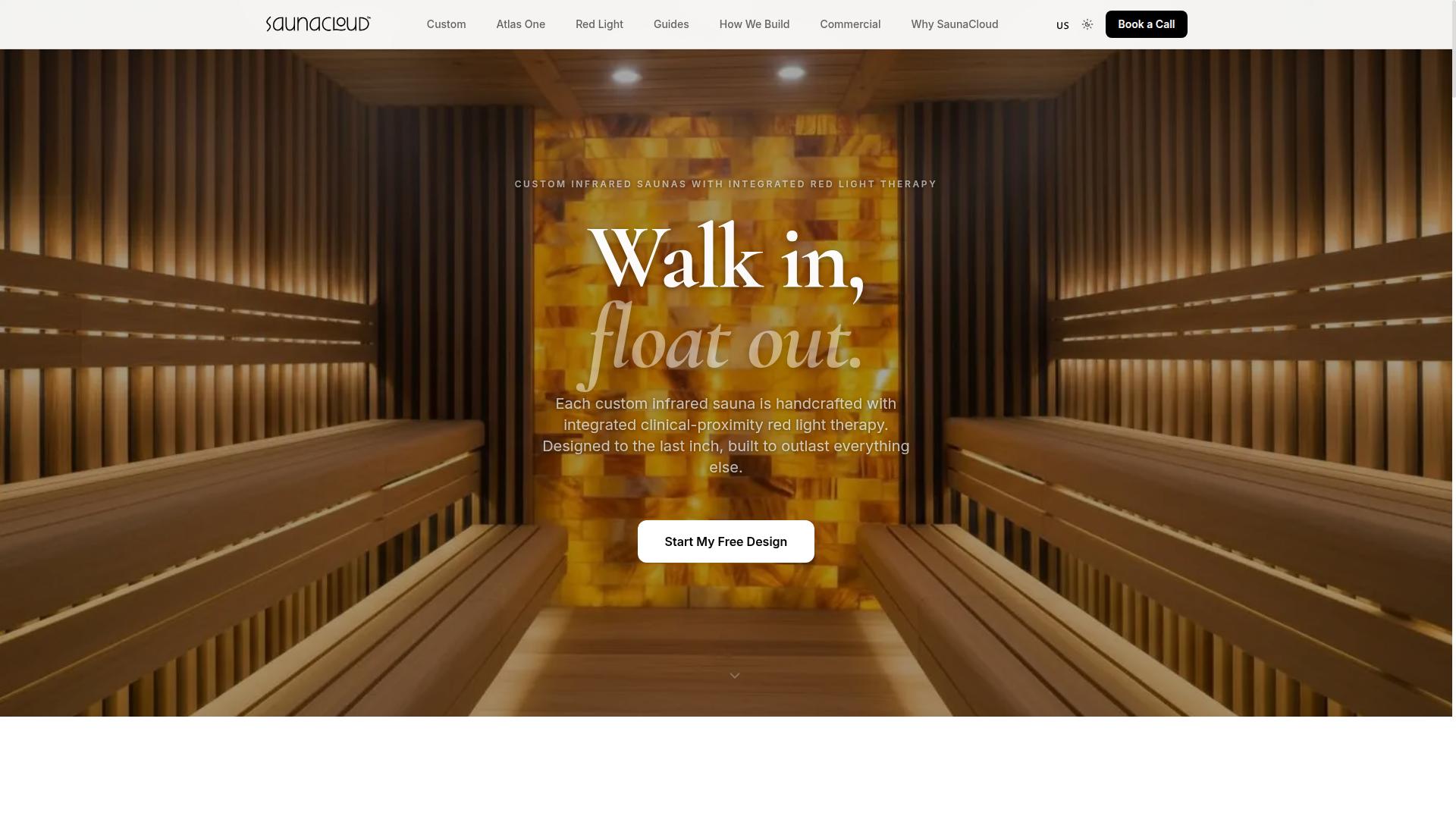
SaunaCloud is a California-based manufacturer of custom infrared saunas that integrate clinical-proximity red light therapy, founded in 2014 and operating from Diamond Springs, CA. The company also runs facilities in Montreal, Quebec, and has completed more than 3,000 installations across North America.
What sets SaunaCloud apart is vertical integration. The company designs, engineers, and builds every sauna in-house, including VantaWave® heaters, CORE 5™ power supplies, printed circuit boards, Wi-Fi control systems, and red light therapy arrays. That level of control matters when you are shopping for a low EMF infrared sauna, because electromagnetic fields originate in the wiring, power supply, and electrical components, not just the heater itself.
This buyer's guide is written for three groups: homeowners building a personal recovery space, clinics adding infrared therapy to a treatment menu, and wellness centers equipping multiple rooms. Whether the goal is pain relief, better sleep, stress reduction, or cardiovascular support, the same buying questions apply. The sections ahead walk through EMF levels and how to read them in milligauss (mG), red light therapy integration, heater types, cabin materials, control features, pricing considerations, and the trust signals that separate a credible manufacturer from a reseller.
By the end, you should be able to compare any infrared sauna on the market, including SaunaCloud's custom builds, against a clear, practical checklist rather than marketing claims alone.
Why Low EMF Matters When Choosing an Infrared Sauna
Electromagnetic fields (EMF) are invisible areas of energy produced by electrical wiring and appliances, and in an infrared sauna, they come primarily from the heating elements, power supply, and control panel. Every electrical device around you generates some level of EMF, from your refrigerator to your phone charger. The question is not whether EMF exists in a sauna, but how much of it reaches your body while you sit inside.
That distinction matters because sauna sessions involve prolonged, close-range exposure. You might spend 20 to 45 minutes per session, several times a week, positioned just inches from the heat source. Research suggests that sustained exposure to elevated EMF levels may be linked to concerns such as sleep disruption, headaches, and increased feelings of stress. While the science continues to evolve, many health-conscious buyers prefer to reduce unnecessary exposure wherever practical.
EMF strength is measured in milligauss (mG), and the unit appears on every gauss meter reading. For context, common household appliances can register anywhere from under 1 mG to well over 10 mG depending on distance and design. A blender might read high at the motor but drop off quickly, while a sauna heater sits near you for the entire session. That is why the measurement at your seating position, not at the heater itself, is what counts.
Low EMF design also reflects broader build quality. Cleaner wiring configurations, a well-shielded power supply and transformer, and thoughtfully placed electrical components all reduce emissions. Brands that prioritize ultra-low EMF construction tend to apply the same care to materials and safety. The sections below cover the specific levels worth targeting and a red light therapy feature that most buyers never think to ask about.
What EMF Levels to Look For (and What SaunaCloud's VantaWave® Heaters Emit)
When evaluating an infrared sauna, look for EMF emissions below 3 milligauss (mG) at the seating position, and ideally under 1 mG for continuous use. These two thresholds give you a simple filter: under 3 mG is considered low, and under 1 mG is excellent. If a manufacturer cannot tell you the reading at the bench, that is a warning sign.
SaunaCloud's VantaWave® carbon heaters emit under 3 mG, and often below 0.5 mG, which places them firmly in ultra-low EMF territory. They also reach a 190°F surface temperature at a 7.9 microns peak wavelength, putting the output in the far infrared range where deep tissue warming occurs. The heaters are designed and manufactured in-house, so the EMF profile is controlled at the source rather than patched afterward.
Heater type influences emissions. Ceramic and magnesium oxide heaters can perform well but vary widely by brand and wiring. Incandescent heaters tend to run hotter at the surface with different emission characteristics. Carbon fiber heaters like VantaWave® are popular in low EMF designs because they distribute heat evenly across a large surface.
Verification is straightforward. A handheld EMF meter or gauss meter lets you check readings at the seat, backrest, and floor before you commit. Ask the seller for their measurement method, or bring a meter to a showroom. Pair this with other markers of a clean build, such as clear-grade kiln-dried Western Red Cedar with no particle board, glues, or veneers, and you have a solid basis for comparison.
Red Light Therapy at Clinical Proximity: A Feature Most Buyers Overlook
Red light therapy uses specific wavelengths of light to stimulate cellular repair, reduce inflammation, and promote skin health, but its effectiveness depends heavily on the distance between the light source and your skin. The two wavelengths most often studied are 660nm red light and 850nm near infrared. The first targets surface skin, while the second penetrates deeper into muscle and joint tissue.
Here is the detail most shoppers miss. Clinical research typically places devices 2 to 6 inches from the skin. Light intensity falls off sharply with distance, so a panel mounted across the cabin may deliver a fraction of the intended dose. A sauna can advertise red light therapy and still position the lights too far away to matter.
SaunaCloud integrates 660nm red and 850nm near infrared LED therapy directly into the benches and backrests, keeping the lights at that 2 to 6 inch clinical proximity. You receive the therapy passively while you sit, with no repositioning or separate device required. This is a design decision, not a marketing add-on, and it is easy to overlook when comparing spec sheets.
When you evaluate any sauna, ask two questions: what wavelengths are used, and how far are the lights from your body? If the answer to the second question is vague, the feature is likely cosmetic. SaunaCloud's placement in the Atlas and Sierra models reflects the same attention to detail as the VantaWave® heaters, and it is one reason buyers comparing a low EMF infrared sauna should look beyond the heater spec alone.
Key Features and What Makes SaunaCloud Stand Out
SaunaCloud distinguishes itself through custom builds, in-house manufacturing, and a focus on low EMF and integrated red light therapy. For buyers comparing low EMF infrared sauna options, those three priorities address the concerns that matter most: measurable electromagnetic fields, material safety, and a sauna that fits your space rather than the other way around.
The company has been building since 2014 and has completed more than 3,000 installations. Its lineup centers on custom infrared saunas, the Atlas and Sierra models, each configured to order rather than pulled from a warehouse shelf.
At the core of every unit are VantaWave® ultra-low-EMF carbon heaters. Carbon fiber heating elements are a common choice in the category, but the wiring configuration, power supply, and transformer are what ultimately shape EMF emissions. SaunaCloud's approach pairs the heater design with an emphasis on keeping electromagnetic fields low throughout the cabin.
Red light therapy is integrated rather than sold as an add-on. Each sauna includes 660nm red and 850nm near-infrared LED therapy positioned 2 to 6 inches from the skin, a distance that keeps the light close to the body during a session. Wi-Fi control systems come standard, and outdoor saunas are weather-sealed with cedar and stainless steel.
Material choice is the third pillar. SaunaCloud uses premium Western Red Cedar construction and avoids the questionable finishes and adhesives that can off-gas in a heated cabin. Commercial saunas are also offered for buyers who need more than one unit.
Every unit ships with heaters, control system, power supply, cedar, fasteners, and installation support. A 7-year limited lifetime warranty covers the build. The sections below break down how the custom process works, which woods are available, and why manufacturing location affects quality control.
Custom Builds, Materials, and In-House Manufacturing
SaunaCloud builds each sauna to order, allowing customers to choose dimensions, wood type, heater placement, and features like red light therapy integration. Nothing is standardized unless you want it to be, which matters when a room has an awkward corner, a low ceiling, or a door that swings the wrong way.
Wood selection drives both durability and how the cabin feels during long sessions. Buyers can choose between Canadian red cedar, hemlock, and basswood. Cedar brings natural rot resistance and a familiar sauna aroma, while hemlock and basswood offer lighter tones and different price points. Hypoallergenic and non-toxic materials are used throughout, with VOC-free finishes so the cabin does not release questionable compounds when the heaters warm the wood.
Manufacturing happens in-house in California. Keeping production under one roof means the same team handles the frame, the heater wiring, the control panel, and the final assembly. That level of control is hard to maintain when cabinets are sourced from multiple suppliers, and it directly affects how consistently low EMF readings stay across units.
Custom builds also serve buyers with needs beyond a home installation. A clinic requiring multiple saunas, for example, can specify matching dimensions and heater placement across every room so the experience stays consistent from one unit to the next.
Delivery is designed to remove guesswork. SaunaCloud ships complete kits with all components and fasteners, along with detailed installation plans. Phone and video support are available during assembly, which helps when a step in the plan needs clarification. Typical production time runs 7 to 8 weeks, so it is worth planning your timeline around that window before committing to a delivery date.
How SaunaCloud Compares on the Specs That Count
When comparing infrared saunas, focus on EMF emissions, heater type and placement, red light therapy proximity, materials, warranty, and support. These six factors separate a genuinely low EMF infrared sauna from one that simply markets itself that way. Everything else, from cabin finish to control panel layout, is secondary.
The table below outlines how SaunaCloud's published specifications stack up against what buyers commonly encounter in the wider infrared sauna market. Competitor figures are general industry patterns rather than specific brand claims, so treat them as questions to ask any manufacturer.
| Spec | Common Industry Pattern | SaunaCloud |
|---|---|---|
| EMF emissions at heater | Often above 5 mG, sometimes much higher | VantaWave® heaters under 3 mG, often below 0.5 mG |
| Red light therapy distance | Frequently positioned more than 12 inches from the body | Integrated into benches and backrests at 2 to 6 inches |
| Heater performance | Varies widely by heater type and placement | 190°F surface temperature at 7.9 microns peak wavelength |
| Materials | Range from basswood and hemlock to veneers and particle board | Clear-grade kiln-dried Western Red Cedar, no particle board, glues, or veneers |
| Warranty | Often limited to a few years on select components | 7-year limited lifetime warranty |
| Support | Email or chat tickets are common | Direct phone and video support |
EMF emissions are the headline number in any low EMF infrared sauna buyer's guide. Readings are measured in milligauss, or mG, and the lower the figure at the heater and at seated body position, the better. SaunaCloud's VantaWave® heaters are rated under 3 mG and often measure below 0.5 mG. Many saunas on the market publish no EMF figures at all, or list readings well above 5 mG.
Red light therapy proximity matters just as much as raw output. Light intensity drops sharply with distance, so panels mounted far from the body deliver a fraction of their rated power to the skin. SaunaCloud builds red light therapy directly into the benches and backrests at 2 to 6 inches, which the company describes as clinical proximity.
Heater type and placement shape both coverage and comfort. SaunaCloud designs and manufactures all components in-house, and its heaters reach 190°F surface temperature at a 7.9 microns peak wavelength, within the far infrared range the body absorbs efficiently.
Materials and warranty round out the picture. SaunaCloud uses clear-grade kiln-dried Western Red Cedar with no particle board, glues, or veneers, and backs its cabins with a 7-year limited lifetime warranty. Support runs through direct phone and video channels rather than ticket queues alone.
Before buying any sauna, ask the manufacturer for EMF meter readings taken at the heater surface and at normal seated position. Request the red light specification too, including wavelength and the distance from the emitters to the body. A brand confident in its engineering will share these numbers without hesitation.
SaunaCloud's track record supports its specs. The company holds a 4.8/5 Trustpilot rating from 217 verified reviews and a BBB A+ rating since 2015, and it was named an Inc. Regionals Pacific #118 fastest-growing company in 2023. Its saunas are used by Tony Robbins, The Westin, Marriott, and Cavallo Point Resort.
Pricing, Customization, and What's Included
SaunaCloud saunas are custom-built, so pricing varies based on size, wood type, heater configuration, and additional features like red light therapy. There is no single sticker price that applies to every buyer, because no two SaunaCloud builds are identical.
As a general frame of reference, a low EMF infrared sauna from a custom builder typically starts around $5,000 and can exceed $15,000 depending on specifications. Smaller two-person cabins with standard heater layouts sit at the lower end, while larger multi-person units, outdoor models, and builds with added light therapy land higher.
That range is not unique to SaunaCloud. Custom infrared saunas across the industry are priced by materials, heater count, and complexity, and any builder quoting a flat price for every configuration is likely cutting corners somewhere. The honest answer to "what does it cost" is always: it depends on what you ask for.
What Every SaunaCloud Unit Includes
One of the more reassuring aspects of buying from SaunaCloud is that the price is not a shell that gets nickel-and-dimed later. Every unit ships as a complete kit, and the brand states plainly what comes in the box.
- Heaters and control system
- Power supply
- Cedar components
- All required fasteners
- Installation support
SaunaCloud also provides detailed installation plans along with phone and video support, so buyers are not left decoding a vague diagram on their own. Every unit is backed by a 7-year limited lifetime warranty, which is a meaningful signal of how the company views the longevity of its cabins.
For anyone comparing a SaunaCloud build against a mass-market cabin, this is where the math shifts. A cheaper unit that arrives without a power supply, clear plans, or a real warranty often costs more once those gaps are filled. The upfront number and the true cost are rarely the same figure.
Customization Options
Because SaunaCloud builds to order, buyers have real input into how the finished sauna looks and performs. The main variables are dimensions, wood type, and heater placement, each of which affects both the experience and the price.
Wood choice matters for more than appearance. SaunaCloud uses premium Western Red Cedar construction, a wood valued for its stability and natural resistance to moisture. Outdoor models are weather-sealed with cedar and stainless steel, so an exterior installation holds up to the elements rather than needing a separate enclosure.
Heater configuration is the other major lever. SaunaCloud's Atlas and Sierra models use VantaWave® ultra-low-EMF carbon heaters, and how those heaters are arranged within the cabin influences coverage, warm-up behavior, and the overall feel of a session. Buyers who care about EMF exposure measured in milligauss (mG) should treat heater placement as a specification worth discussing, not an afterthought.
Red light therapy is the most popular add-on. SaunaCloud integrates 660nm red and 850nm near-infrared LED therapy positioned 2 to 6 inches from the skin, a proximity that keeps the light close to the body rather than diffused across the room. Wi-Fi control systems are also part of the build, letting owners manage sessions without leaving the cabin.
Getting an Accurate Quote
Since every SaunaCloud sauna is made to order, the only reliable price is a personalized quote. Buyers should contact SaunaCloud directly with their intended size, wood preference, heater layout, and whether they want red light therapy or an outdoor configuration.
Having those answers ready before the conversation shortens the process considerably. It also prevents the common mistake of anchoring on a base price and then discovering that the features you actually wanted push the total well past it.
Commercial saunas are available as well, so gyms, clinics, and wellness businesses should specify their intended usage and traffic when requesting pricing. A commercial build has different demands than a home cabin, and the quote should reflect that from the start.
The right way to evaluate any of this is value over cheapest upfront cost. A low EMF infrared sauna is a long-term purchase, and the components that keep EMF emissions low, including the wiring configuration, power supply, transformer, and other electrical components, are exactly the parts where budget builders economize. A cabin that saves a few thousand dollars today but runs hotter on electromagnetic fields or fails in year three is not a bargain.
For SaunaCloud shoppers, the practical takeaway is simple. Decide what you need, ask for a quote that reflects it, and weigh the total package, including the complete kit, the installation plans, the support, and the 7-year limited lifetime warranty, against the sticker price alone. That comparison is where a custom-built sauna usually wins.
Trust Signals: Track Record, Warranty, and Support
SaunaCloud has been building saunas since 2014 and has completed over 3,000 installations across North America. That kind of longevity matters in a market where many low EMF infrared sauna sellers appear and disappear within a few years.
For a buyer weighing electromagnetic fields and EMF exposure, a long track record is more than a feel-good number. It signals that the company has fielded real questions about milligauss (mG) readings, wiring configuration, and power supply design many times over, and has refined its builds in response.
SaunaCloud backs its cabins with a 7-year limited lifetime warranty. A warranty of that length is a meaningful trust signal for any infrared sauna, and it is especially relevant when you are evaluating heater type and electrical components, the parts most likely to need attention over time.
Support is handled directly by the founder and team rather than a distant call center. Christopher Kiggins, Founder and Lead Designer, is a University of California graduate and the author of The Definitive Guide to Infrared Saunas (2015). He personally handles consultations and stays hands-on with every build.
That hands-on approach extends into the buying and installation process. SaunaCloud provides detailed installation plans, including 3D renderings and electrical plans, along with phone and video support. Complete kits ship with the order, so you are not left sourcing missing pieces on your own.
Practical support like this matters because low EMF infrared sauna setups involve real electrical decisions. Heater placement, transformer location, and control panel wiring all affect how a cabin performs in your space. Having a direct line to the people who designed the build removes much of the guesswork.
- 10+ years building saunas, since 2014
- 3,000+ installations across North America
- 7-year limited lifetime warranty
- Direct support from the founder and team
- Detailed installation plans, including 3D renderings and electrical plans
- Phone and video support plus complete kits
Compare those signals against what you would want from any seller in this category. A company that has shipped thousands of cabins, publishes a real warranty, and puts its founder on the phone is standing behind its products in a way that is easy to verify.
If you are working through this buyer's guide and comparing ultra-low EMF claims, treat track record, warranty terms, and support access as core criteria alongside EMF meter readings and heater placement. SaunaCloud meets all three: a decade-plus of builds, a 7-year limited lifetime warranty, and direct access to the team that designs and delivers each sauna.
Who Should Choose a SaunaCloud Sauna
A SaunaCloud sauna is ideal for homeowners, clinics, and wellness centers that prioritize low EMF emissions, clinical-proximity red light therapy, and custom-built quality. The brand serves North America with infrared saunas designed for recovery, pain relief, sleep improvement, stress reduction, and cardiovascular health. If those goals match your own, this buyer's guide will help you see where SaunaCloud fits.
What ties these different buyers together is a shared set of priorities. They want an ultra-low EMF infrared sauna they can use often without worrying about electromagnetic fields, and they want red light therapy positioned at distances that make sessions worthwhile. They also need a cabin built to fit a specific room, not a one-size-fits-all box.
Below are the main groups who tend to get the most from a SaunaCloud build.
- Health-conscious homeowners who want a personal sauna for daily or near-daily use and care about non-toxic materials and low EMF exposure.
- Medical clinics that need reliable equipment for patient recovery, pain relief, and stress reduction programs.
- Sports recovery centers supporting athletes through consistent heat and light therapy sessions.
- Wellness spas that need durable cabins, custom layouts, and dependable long-term support.
For homeowners, the appeal is control. You choose the heater type, the wood, and the footprint so the sauna fits your space and your routine rather than the other way around. A cabin that runs clean and quiet is easier to keep using week after week.
For clinics and recovery centers, the calculation is different. When a sauna is part of a treatment or recovery offering, consistent output and safe operation matter more than novelty. A low EMF design and thoughtful heater placement support that kind of regular, professional use.
Wellness spas often need several units or unusual room dimensions. Custom-built cabins let a spa match its existing layout instead of rebuilding around a fixed product. That flexibility is one reason SaunaCloud serves commercial and residential buyers across North America.
Consider SaunaCloud if you value American-made craftsmanship, non-toxic materials, and a long-term investment in health rather than a short-term purchase. The brand's focus on low EMF emissions, red light therapy at effective distances, and customization lines up with buyers who plan to keep their sauna for years. If your priorities are durability, safety, and a build that fits your exact space, SaunaCloud is a strong fit.
Final Verdict: Is SaunaCloud the Right Low EMF Sauna for You?
If you're seeking a low EMF infrared sauna with integrated red light therapy at clinical proximity, SaunaCloud is a strong contender that backs its claims with verifiable specs and a solid warranty. This buyer's guide has walked through the factors that matter most when comparing options: heater technology, electromagnetic field output, red light positioning, material safety, and long-term support. Here is where SaunaCloud lands on each of those points.
The headline number is the one serious low EMF shoppers care about most. SaunaCloud's VantaWave® heaters emit under 3 mG, a figure that sits well below the levels many conventional infrared cabins produce at comparable distances. For anyone tracking EMF exposure with an EMF meter or gauss meter, that spec is the clearest signal of intent.
Red light therapy is not an afterthought here. It is integrated at 2 to 6 inches from the body, which is the kind of proximity associated with clinical use rather than decorative ambient lighting. Each sauna is also custom-built with non-toxic materials, so you are not trading low electromagnetic fields for questionable cabin construction.
Support and warranty round out the picture. SaunaCloud offers a 7-year limited lifetime warranty along with direct support, meaning questions about wiring configuration, electrical components, or your control panel go to the company itself rather than a third-party reseller.
Weighing the tradeoffs honestly:
- Pros: VantaWave® heaters rated under 3 mG, red light therapy at 2 to 6 inches, custom builds with non-toxic materials, a 7-year limited lifetime warranty, and direct brand support.
- Cons: Custom-built saunas typically involve a longer lead time than off-the-shelf units, and the specialized low EMF design may carry a higher upfront cost than generic cabins.
Choose SaunaCloud if your priorities are ultra-low EMF output, genuine clinical proximity red light therapy, and customization rather than a mass-produced cabin. If you simply want the cheapest far infrared box available, this is likely more sauna than you need.
To move forward, visit the SaunaCloud website for current specifications or reach out for a quote. You can call 800-370-0820 or email [email protected]. Showroom visits are available by appointment at 6100 Enterprise Dr. Suite G, Diamond Springs, CA 95619. For most readers working through this buyer's guide, the verdict is straightforward: SaunaCloud is a legitimate, well-specified choice for a low EMF infrared sauna.
Frequently Asked Questions
What EMF level should I look for in a low EMF infrared sauna?
As a general rule, lower is better, and you'll want to see a specific milligauss (mG) rating rather than vague marketing language. SaunaCloud's VantaWave® carbon heaters emit under 3mG EMF and are often below 0.5mG, so you can compare that figure directly against any sauna you're considering. If a brand won't publish a number, treat that as a red flag.
Why does heater type matter for EMF exposure?
Different heater technologies produce different EMF levels, so the heater inside the sauna is one of the most important things to evaluate. SaunaCloud builds its saunas around VantaWave® ultra-low-EMF carbon heaters, which reach 190°F surface temperature at a 7.9 microns peak wavelength. Ask any manufacturer what heaters they use and what EMF they emit at typical sitting distance.
How close should red light therapy be to my body to be effective?
Proximity matters a great deal with red light therapy, because intensity drops quickly with distance. SaunaCloud integrates 660nm red and 850nm near-infrared LED therapy into the benches and backrests at clinical proximity of 2-6 inches from the skin. If a sauna's red lights are mounted far away on a wall or ceiling, you're likely not getting the same benefit.
Can SaunaCloud build a sauna that fits my space and needs?
Yes - SaunaCloud engineers and handcrafts custom infrared saunas rather than selling only fixed, off-the-shelf units. The Atlas and Sierra models can be tailored to your space, and the company provides detailed installation plans along with phone and video support. Showroom visits are available by appointment if you'd like to see the craftsmanship in person.
What kind of warranty and support comes with a SaunaCloud sauna?
SaunaCloud backs its saunas with a 7-year limited lifetime warranty and ships complete kits with all components and fasteners included. Because the company has been building since 2014 with 3,000+ installations, you're working with an established team rather than an unknown seller. Founder Christopher Kiggins personally handles consultations, so you can get direct answers before and after your purchase.
How do I actually get started with a SaunaCloud sauna?
Start by contacting SaunaCloud directly at 800-370-0820 or [email protected] to discuss your goals, whether that's recovery, pain relief, sleep improvement, stress reduction, or cardiovascular health. The team serves homeowners, clinics, and wellness centers across North America, and can walk you through customization options and typical production timelines. You can also visit the Diamond Springs, CA facility by appointment.
Recommended Resources: